
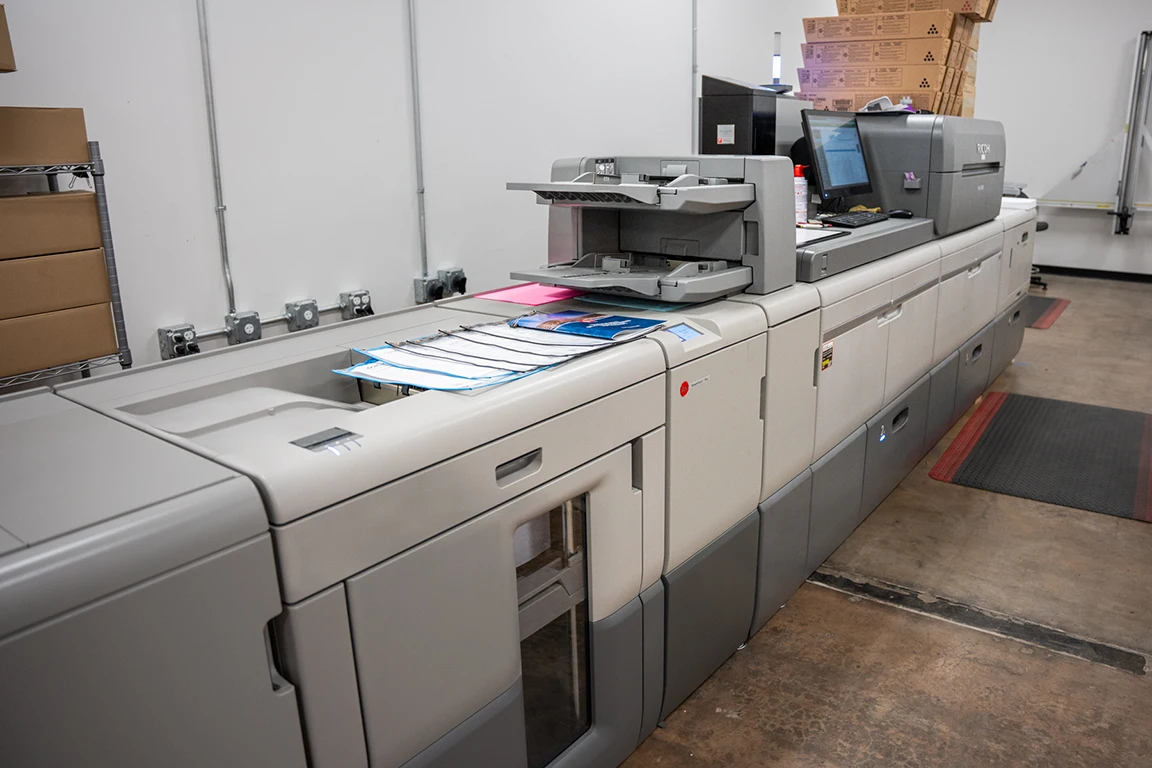
A print fleet assessment is a systematic audit of every printing device a business runs — what the devices are, where they sit, how much they print, and what they cost. Print fleet optimization is the follow-through: using those findings to right-size the fleet, cut waste, and bring print costs under control. Together they replace guesswork about printing with a documented, managed environment.
What Is a Print Fleet Assessment?
A print fleet assessment is a complete audit of all the printers, copiers, and multifunction devices across a business. It captures what each device is, where it lives, how much it prints, what it costs to run, and how it’s being used — turning a print environment most businesses have never fully measured into a clear, documented picture.
Most organizations genuinely don’t know what they’re spending on print. Devices get bought piecemeal over years, supplies are ordered reactively, and the true cost is scattered across departments and vendor invoices that never get added up. An assessment pulls all of that into one place, which is the only way to see the whole picture and make decisions based on fact instead of guesswork.
This kind of assessment is the natural starting point of managed print. Before anything gets optimized or managed, the assessment establishes the baseline — what you have, what it costs, and where the problems are.
What Does a Print Fleet Assessment Measure?
A thorough print fleet assessment looks at the print environment from several angles, each one surfacing a different piece of the cost-and-efficiency picture.
Device Inventory
A full accounting of every device — make, model, age, and capabilities — including the forgotten desktop printers that never made it onto any list. You can’t manage or budget for equipment you haven’t accounted for.
Print Volumes
How much each device actually prints, in black-and-white and color, over time. Volume data reveals which devices are overworked, which are barely used, and where the real printing happens.
Cost Per Page
The true cost of a printed page on each device, factoring in supplies, maintenance, and the device itself. Cost per page is the metric that makes wildly different devices comparable and exposes the expensive outliers.
Supplies and Consumables
How toner, ink, and other consumables are purchased, stored, and used across the fleet. Assessments routinely uncover overstocked supplies for retired devices and emergency orders that cost far more than planned replenishment.
Device Utilization and Placement
Whether devices are in the right places and matched to the work they do. An assessment finds the underused machine in one office and the overloaded one down the hall, along with devices sized wrong for their actual workload.
Security and Compliance
How exposed the fleet is — unsecured devices, open settings, and gaps that matter for regulated data. Modern printers are networked computers, and an assessment flags where they’ve been left as a weak point.
What Is Print Fleet Optimization?
Print fleet optimization is the process of acting on an assessment’s findings to build a leaner, more cost-effective print environment. Where the assessment measures, optimization changes — reshaping the fleet so the business has the right devices, in the right places, at the lowest sensible cost.
Optimization is rarely a single dramatic move. It’s a set of deliberate adjustments — consolidating devices, standardizing models, relocating equipment, and setting usage rules — that together bring print spending and effort down without disrupting the work people need to do. Delivered as part of an ongoing managed print service, optimization also doesn’t end after the first round; the fleet keeps getting tuned as the business changes.
What Does Print Fleet Optimization Change?
Print fleet optimization turns the assessment’s findings into concrete changes to the fleet. The specific moves depend on what the data shows, but they typically include:
- Right-sizing the number of devices to match actual print volumes
- Consolidating scattered desktop printers into shared multifunction devices
- Standardizing on fewer makes and models to simplify supplies and support
- Relocating devices so they’re where the work actually happens
- Setting print rules and policies, such as default black-and-white or duplex printing
- Replacing aging or inefficient units that cost too much to keep running
How Does the Print Fleet Assessment and Optimization Process Work?
A print fleet assessment and optimization engagement starts with a full audit of what’s in place and runs through right-sizing, implementation, and the ongoing tuning that keeps the fleet efficient as the business changes.
- Walkthrough and discovery — A review of the physical environment and devices establishes what’s actually in place, including equipment that isn’t on any record.
- Data collection — Print volumes, costs, supplies usage, and device details are gathered to build an accurate, measured baseline.
- Analysis — The data is examined to find the waste, the expensive outliers, the underused and overloaded devices, and the gaps.
- Recommendations — A right-sizing plan lays out which devices to keep, consolidate, relocate, or replace, and what it means for cost.
- Implementation — The plan is carried out — devices adjusted, standardized, and configured, with rules put in place.
- Ongoing review — The fleet is monitored and periodically reassessed, so it stays optimized as the business grows and changes.
What Are the Benefits of Print Fleet Optimization?
Optimizing a print fleet pays off across cost, effort, and sustainability — turning print from an untracked expense into a managed one.
Lower Cost Per Page
Consolidating onto efficient, right-sized devices brings down what each page actually costs, and the savings compound across every page the business prints.
Fewer Devices to Manage
A leaner fleet means less equipment to maintain, supply, and troubleshoot, which cuts both direct costs and the hidden time spent keeping machines running.
Less Waste
Right-sized devices, default duplex and black-and-white rules, and controlled supplies all reduce the paper, toner, and energy a business burns through needlessly.
Predictable Spend
With the fleet measured and managed, print becomes a known, budgetable cost instead of a stream of surprise supply orders and emergency repairs.
Less Downtime
Standardized, well-matched devices backed by proactive management break down less and get fixed faster, so printing stops interrupting the work.
Sustainability Gains
Fewer devices and less waste shrink the environmental footprint of printing, which increasingly matters for reporting and for the values businesses want to operate by.
Signs Your Business Needs a Print Fleet Assessment
A print fleet assessment is worth doing when the print environment has grown without anyone really steering it. A few signs make the case clearly.
- You don’t know your true print costs — Nobody can say with confidence what the business spends on printing each month.
- You have too many devices or too many brands — The fleet has sprawled into a mix of makes and models that’s hard to supply and support.
- Breakdowns and service calls are frequent — Aging or overworked devices fail often enough to disrupt the workday.
- Supplies are a constant headache — Toner runs out at the worst times while unused cartridges pile up for devices you no longer have.
- There’s no visibility into who prints what — Print usage is a black box, with no reporting on volumes by device, department, or user.
- You’re growing or moving offices — Expansion or a move is the natural moment to right-size the fleet instead of replicating an inefficient setup.
Seeing your own office in that list?
Request a print assessment →Frequently Asked Questions About Print Fleet Assessment & Optimization
What’s the Difference Between a Print Fleet Assessment and Print Fleet Optimization?
A print fleet assessment is the audit — measuring what devices a business has, how much they print, and what they cost. Print fleet optimization is the action taken on those findings — consolidating, standardizing, relocating, and right-sizing the fleet to cut cost and waste. The assessment tells you where things stand; optimization is how you improve them.
How Long Does a Print Fleet Assessment Take?
A print fleet assessment’s timeline depends on the size of the fleet and the number of locations, but it generally runs from a few days to a few weeks. Gathering accurate volume and cost data over a representative period is what takes the most time, since a reliable baseline matters more than a fast one.
How Often Should You Reassess Your Print Fleet?
A print fleet should be reviewed on an ongoing basis and formally reassessed periodically — often annually, or whenever the business changes meaningfully. Growth, an office move, a shift to hybrid work, or a jump in print costs are all triggers to reassess, since the optimal fleet changes as the business does.
Is a Print Fleet Assessment the Same as Managed Print?
A print fleet assessment is one part of managed print, not the whole thing. The assessment is the upfront audit that establishes the baseline; managed print is the ongoing service that optimizes, monitors, maintains, and supplies the fleet over time. The assessment is where a managed print relationship typically begins.
Does a Print Fleet Assessment Cost Anything?
A print fleet assessment is often provided at no cost as part of evaluating a managed print engagement, since it’s how a provider understands the environment and builds a proposal. What it asks of a business is mostly access and a bit of time — the value it returns is a clear, measured picture of print costs most organizations have never had.
Securing the Fleet Is the Other Half of Managing It
Optimizing a print fleet gets the cost and efficiency under control, but the same devices an assessment inventories are also one of the most overlooked risks on a business network. Right-sizing and securing the fleet are two lenses on the same equipment — one focused on what it costs, the other on how exposed it leaves you. Pairing optimization with strong print security makes sure the leaner fleet you end up with is also a protected one.
See What Your Business Is Really Spending on Print
For more than 70 years, we’ve helped businesses across Oklahoma, Kansas, and Missouri get more from their office technology and spend less doing it. A print fleet assessment gives you the one thing most organizations have never had — a clear, measured picture of what printing actually costs — and a right-sizing plan built on what the data shows, not on selling you more equipment.
Technology fails. We don’t.
Reach out for a conversation about a print fleet assessment, and we’ll help you find where getting your print environment under control would make the biggest difference.