
IT projects
With a focus on efficiency, scalability, and reliability, RK Black ensures your IT projects drive growth and innovation, empowering your business to stay ahead in today’s fast-paced digital world.
Building Reliable Foundations for Business Success
Whether you’re migrating to the cloud, selecting tools to streamline operations, or optimizing licensing for cost-effectiveness, we’re here to simplify the process. These improvements directly impact how systems perform, how data is protected, and how reliably your IT & security services operate day to day.
Comprehensive Networking Solutions
- Network Design and Installation: Create a secure and scalable network architecture to support your current and future needs.
- Wireless Networking: Implement reliable Wi-Fi solutions for optimal connectivity across your workplace.
- Switching and Routing: Efficiently direct network traffic with high-performance switches and routers.
- Network Security: Protect your data and devices with robust firewalls, intrusion prevention systems, and encrypted connections.
Infrastructure Services for Modern Businesses
- Server Installation and Management: Set up and maintain on-premise and cloud-based servers to handle your applications and data.
- Virtualization Solutions: Optimize resource utilization with virtual servers and desktops, reducing costs and improving flexibility.
- Cloud Integration: Seamlessly connect your infrastructure to cloud platforms, enabling remote access and collaboration.
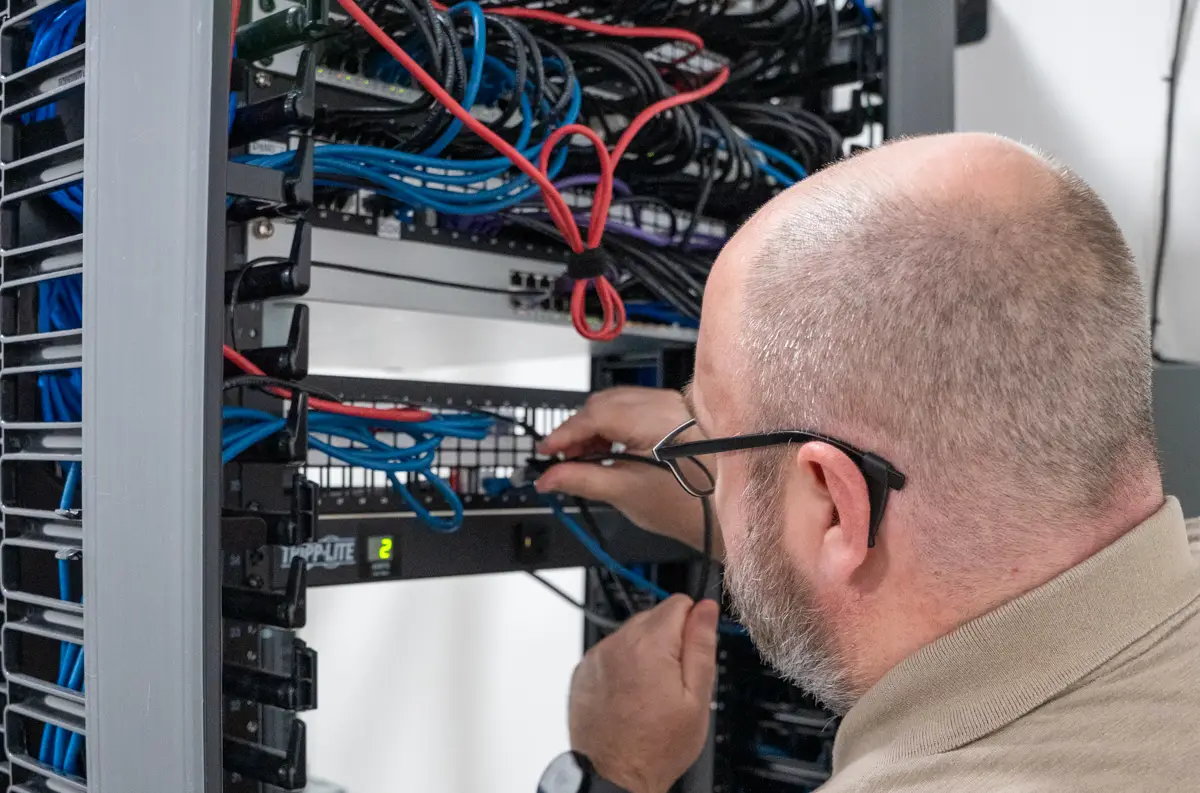
- Structured Cabling: Design and install organized cabling systems for faster data transmission and easy scalability.
- Disaster Recovery and Backup: Protect your critical data with automated backups and recovery solutions to ensure business continuity.
Why Choose R.K. Black?
- Tailored Solutions: We analyze your business requirements and deliver customized networking and infrastructure solutions.
- Expert Team: Our experienced technicians and engineers provide professional design, installation, and ongoing support.
- Reliable Support: With proactive monitoring and fast response times, we ensure your network and systems operate without interruption.
- Cost-Effective Options: We focus on delivering solutions that maximize value and minimize downtime.
Stay Connected, Stay Competitive
Contact Us For IT Security Services

Frequently Asked Questions About IT Projects
What are IT projects?
IT Projects represent planned initiatives to implement new technology capabilities, upgrade existing systems, migrate infrastructure to new platforms, or solve complex technical challenges facing organizations. These projects have clearly defined objectives, established timelines, approved budgets, and specific deliverables measuring success.
Common examples include migrating email and applications to cloud platforms, implementing new business software across departments, upgrading network infrastructure for better performance and security, deploying comprehensive cybersecurity improvements, or consolidating systems after mergers. Unlike ongoing support activities, projects have defined beginnings and endings with measurable outcomes determining success.
Why do IT projects fail?
Poor planning and unrealistic timelines doom many projects before implementation begins. Organizations consistently underestimate complexity, overlook critical dependencies between systems, fail to allocate sufficient resources, or rush timelines to meet arbitrary deadlines rather than actual requirements.
Inadequate communication between technical teams and business stakeholders creates misaligned expectations about scope, capabilities, and outcomes. Scope creep expands projects beyond original parameters without adjusting timelines or budgets accordingly. Lack of executive sponsorship starves projects of resources, organizational support, and authority needed to overcome inevitable obstacles. Insufficient testing discovers problems only after production deployment when fixes prove exponentially more expensive.
What is network infrastructure design?
Network Infrastructure Design creates comprehensive blueprints for building or significantly upgrading networking systems supporting business operations. This process involves assessing current capabilities and limitations, understanding anticipated business growth and requirements, selecting appropriate technologies and products, mapping both physical and logical network topology, and planning layered security architecture.
Effective design carefully balances performance requirements, security needs, growth capacity, reliability expectations, and budget constraints. It incorporates redundancy preventing single points of failure, segmentation containing security breaches, and scalability accommodating future expansion without complete redesign. Quality design prevents expensive rework by accounting for organizational needs holistically rather than addressing immediate pain points in isolation.
Why do cloud migrations fail?
Inadequate planning causes most cloud migration failures as organizations rush into migration without thoroughly understanding application dependencies, data relationships, integration requirements, or true cloud readiness of specific workloads. Treating cloud as simply “someone else’s data center” rather than fundamentally different architecture leads to suboptimal outcomes.
Severely underestimating complexity results in blown timelines and budgets that erode confidence and support. Poor change management leaves users frustrated, productivity impacted, and resistance to future initiatives heightened. Inadequate testing discovers critical problems only after production cutover when rolling back proves difficult or impossible. Lack of cloud expertise creates suboptimal architectures that fail to deliver expected cost savings or capability improvements.
How do Managed Services streamline cloud migrations?
Managed Service providers bring deep experience from dozens or hundreds of previous migrations across diverse environments and challenges. They follow proven methodologies reducing risk and accelerating timelines through structured assessment, meticulous planning, and disciplined execution with appropriate checkpoints.
Providers handle technical complexities including application remediation for cloud compatibility, secure data migration minimizing downtime, comprehensive testing before cutover, and coordinated production transition. Their expertise in cloud architecture ensures optimal configurations from the start rather than requiring expensive remediation later. Post-migration support ensures rapid resolution of issues that inevitably arise as users adapt to new environments.
What is cloud integration?
Cloud Integration connects cloud-based applications and services with each other and with on-premise systems remaining in your data center. This enables automated data flow between systems, workflows spanning multiple platforms, and unified user experiences despite using diverse applications.
Integration eliminates manual data entry between systems, ensures information consistency across platforms, and enables sophisticated business processes spanning multiple applications. Modern businesses typically use dozens of cloud services—integration transforms isolated tools into cohesive technology ecosystems supporting efficient operations and providing complete visibility into business processes.
What is structured cabling?
Structured Cabling establishes standardized infrastructure for telecommunications and data networks following industry standards for design, installation, and labeling. Rather than creating ad-hoc point-to-point connections as needs arise, structured systems use hierarchical architecture with consistent components, organization methods, and documentation.
This includes backbone cabling between buildings or floors, horizontal cabling from wiring closets to work areas, and centralized patch panels where all connections terminate and can be easily reconfigured. Standardization dramatically simplifies troubleshooting, moves, additions, and changes while supporting multiple technologies—voice, data, video, security systems, building automation—over the same physical infrastructure.
Why is structured cabling important?
Organized cabling infrastructure supports efficient troubleshooting and changes that would prove time-consuming and expensive in unstructured environments. When problems occur, standardized systems with proper documentation help locate and resolve issues quickly. Adding users or moving workstations involves simple patch cable changes at centralized locations rather than running new cables through walls and ceilings.
Quality structured cabling supports technology evolution over decades—you can upgrade networking equipment without rewiring buildings. Professional installation ensures reliable performance, compliance with industry standards affecting warranties and insurance, and adherence to building codes. Initial investment in proper structured cabling delivers returns for 15-20 years through reduced maintenance costs and simplified changes.