
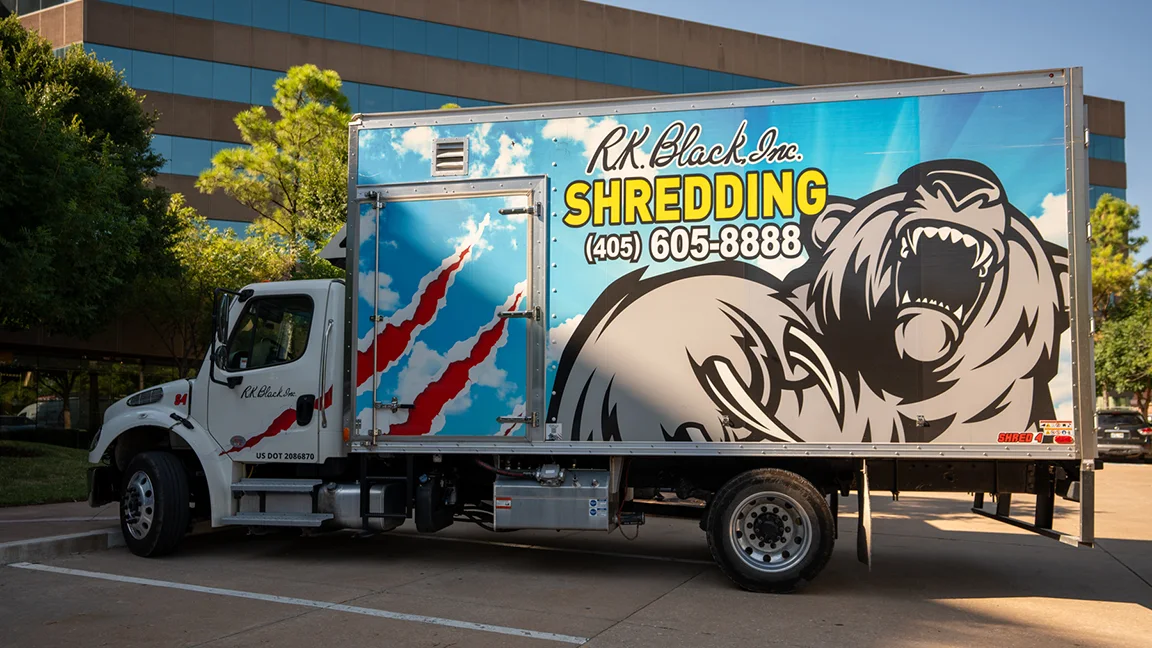
Your business runs on data. Customer records, financial information, proprietary research, employee files—all stored on hard drives throughout your organization. But what happens when those drives reach the end of their useful life?
Deleting files doesn’t actually erase them. Reformatting creates an illusion of security while leaving data vulnerable to recovery by anyone with forensic software and malicious intent.
Hard drive shredding provides the only guaranteed method of permanently destroying sensitive information through complete physical destruction. Industrial shredders reduce drives to fragments small enough that data reconstruction becomes impossible, protecting your business from breaches that could occur years after equipment leaves your facility.
The Physical Destruction Process Explained
How Industrial Shredders Work
Imagine a hard drive entering machinery designed for one purpose: total obliteration. Industrial shredders employ rotating blades, crushing mechanisms, and tremendous hydraulic force to tear apart every component. The platters where magnetic data resides? Shredded into pieces measuring just centimeters across. Circuit boards? Pulverized beyond recognition.
These aren’t your office paper shredders scaled up—they’re purpose-built machines capable of destroying multiple drives simultaneously. The process takes seconds per drive, transforming intact storage devices into unrecognizable debris.
What Gets Destroyed
Hard drive shredding handles more than traditional spinning drives:
- Desktop and laptop hard drives
- Solid-state drives (SSDs)
- External storage devices
- Server drives and arrays
- Backup tapes and cartridges
- Smartphones and tablets containing storage chips
Each device type requires slightly different handling, but the outcome remains identical—complete physical destruction that eliminates any possibility of data recovery.
Modern shredding equipment adapts to various form factors and storage technologies. Whether you’re disposing of decade-old equipment or the latest NVMe drives, professional shredding services process them all with equal thoroughness.
Why Your Delete Button Doesn’t Delete Anything
Click “delete” on a sensitive file right now. Feel safer?
You shouldn’t. Your operating system just removed a directory entry—think of it as erasing an address from a phonebook while leaving the house standing. The actual data remains on the drive until something eventually overwrites it. That might take months. It might never happen.
Reformatting appears more thorough but operates on the same principle. The format operation prepares the drive for new data without actually erasing existing information. Forensic recovery tools exploit this reality every day, pulling supposedly deleted files from drives their owners believed were wiped clean. Law enforcement uses these techniques to solve crimes. Data thieves use them to steal your information.
The Degaussing Myth
Degaussing—exposing drives to powerful magnetic fields—sounds scientific and effective. For older magnetic media, it worked reasonably well. Modern drives with higher storage densities resist degaussing more effectively. Solid-state drives ignore magnetic fields entirely since they store data electronically rather than magnetically.
Physical destruction sidesteps these limitations entirely.
When drive platters exist as metal shavings mixed with crushed circuit boards, no recovery method works. Period.
Compliance Regulations That Mandate Destruction
Healthcare Industry Requirements
HIPAA doesn’t suggest secure disposal of protected health information—it demands it. Healthcare providers, insurers, and their business associates must ensure patient data on retired drives gets destroyed completely. The penalties for HIPAA violations start at $100 per violation and climb to $50,000 per violation with annual maximums exceeding $1.5 million.
One improperly disposed drive containing patient records could trigger investigations, fines, and lawsuits that devastate medical practices and hospitals.
Financial Services Standards
Financial institutions operate under multiple overlapping regulations. The Gramm-Leach-Bliley Act requires safeguarding customer information through its entire lifecycle, including disposal. The SEC imposes additional requirements on investment firms. State regulations add another compliance layer.
Each regulation carries enforcement mechanisms and penalties. More importantly, customers who discover their financial data was exposed through inadequate disposal won’t hesitate to seek legal remedies.
Government and Defense Contractors
Organizations handling government data face the strictest requirements. NIST Special Publication 800-88 provides detailed guidelines for media sanitization. Defense contractors must comply with DFARS regulations that specify approved destruction methods. The consequences of non-compliance extend beyond fines—they include loss of clearances and contract eligibility.
Certificate of destruction documentation becomes critical for these organizations, providing auditable proof that specific drives were destroyed using approved methods on documented dates.
Real-World Breach Scenarios
A medical clinic upgrades its server infrastructure and donates old equipment to a local nonprofit. Six months later, a volunteer discovers patient records still accessible on the “wiped” drives. The clinic faces regulatory investigations and lawsuits.
An accounting firm disposes of employee laptops through a general electronics recycler. Those devices end up in overseas markets where buyers extract client tax returns, W-2 forms, and financial statements. The firm’s malpractice insurance doesn’t cover this exposure.
These aren’t hypothetical scenarios—they happen regularly to businesses that underestimate data persistence and overestimate deletion effectiveness.
The Professional Shredding Experience
Chain of Custody Procedures
Security begins the moment drives leave your facility. Professional services like those provided by RK Black maintain detailed tracking from pickup through destruction. Serial numbers get logged. Asset tags get documented. Every drive’s journey gets recorded.
This isn’t bureaucracy—it’s accountability.
If questions arise during audits or investigations, complete chain of custody documentation proves drives reached their intended destination and met their intended fate.
On-Site vs. Off-Site Destruction
Some businesses prefer having shredding equipment brought to their location. Watching drives get destroyed provides immediate verification and eliminates transport risks. Mobile shredding services accommodate this preference, though at premium pricing.
Off-site destruction offers cost advantages. Drives get transported securely to shredding facilities where industrial equipment processes them efficiently. For businesses disposing of hundreds of drives, the economics favor facility-based services.
Either approach works when you partner with providers who prioritize security. The choice depends on your specific security policies and budget considerations.
The Certificate of Destruction
Following shredding, you receive documentation listing every destroyed drive. These certificates include dates, locations, destruction methods, and witnessed verification. File them carefully—auditors will request them during compliance reviews.
More importantly, certificates provide peace of mind. When you can prove drives were destroyed properly, data security concerns about those specific devices end permanently.
Environmental Responsibility Matters
Hard drive destruction doesn’t mean landfill waste.
The materials in destroyed drives—aluminum housings, copper wiring, rare earth elements, circuit board components—all have recycling value. Responsible providers partner with certified e-waste recyclers who process shredded materials according to R2 or e-Stewards standards. Technology solutions should work for your business and the environment.
After shredding, materials get sorted by type. Ferrous metals go to steel mills. Non-ferrous metals get processed separately. Precious metals from circuit boards enter specialized recovery streams. Even plastics find second lives in manufacturing applications. Your security liability transforms into raw materials that displace virgin resource extraction.
Complete Technology Solutions Need Complete Security
At RK Black, we’ve spent over 70 years building comprehensive technology infrastructures for businesses across Oklahoma, Kansas, and Missouri. Our experience has taught us a fundamental truth: technology fails, but proper planning doesn’t. Data security must extend through the entire equipment lifecycle—from initial deployment through final destruction.
Our managed IT services protect your data during active use. Our document management solutions safeguard information throughout its lifecycle. When equipment reaches retirement, our hard drive shredding services ensure data gets destroyed completely, maintaining the same standards of excellence we apply to every technology solution.
Integrating Destruction Into IT Asset Management
Smart businesses treat drive destruction as another phase of IT asset management rather than an afterthought. When you purchase new computers, simultaneously plan disposal for devices being replaced. Budget for destruction services in your technology refresh cycles. Train your team on proper procedures before devices reach end-of-life.
This integration prevents drives from accumulating in storage closets where they create ongoing security vulnerabilities. It ensures consistent handling regardless of which employees manage disposal. Most importantly, it builds security into standard operating procedures rather than treating it as a special project.
When to Schedule Hard Drive Destruction
During Equipment Refresh Cycles
Your company replaces computers every three to four years on average. Each replacement creates disposal obligations. Waiting to address those obligations invites trouble—drives sitting in storage remain vulnerable to theft, accidental disclosure, or simple neglect as staff changes and organizational memory fades.
Schedule destruction services immediately when decommissioning equipment.
Following Business Transitions
Mergers, acquisitions, office closures, and department consolidations all generate equipment disposal needs. These transitions also create chaos where security procedures get overlooked. Make drive destruction an explicit checklist item for transition planning. Assign specific responsibility for identifying all devices requiring secure disposal.
The busier your organization gets during transitions, the more critical systematic destruction planning becomes.
When Employees Depart
Standard practice involves collecting company devices when employees leave. Laptops, external drives, and other equipment get returned to IT departments. These devices contain cached credentials, saved files, and usage history that might include sensitive information about your business or customers.
Destroying drives from departing employees—especially those in sensitive positions—eliminates information leakage risks. The marginal cost of replacing a hard drive dramatically undervalues the potential exposure from retained employee devices.
Cost Factors in Shredding Services
Pricing varies based on several straightforward factors:
- Volume: Destroying 10 drives costs more per unit than destroying 200
- Service location: On-site mobile shredding commands premium pricing
- Frequency: Regular scheduled service costs less than one-off urgent requests
- Documentation: Witnessed destruction and detailed certificates may carry surcharges
- Media type: Specialized destruction for tapes or SSDs might have different rates
Most businesses find that quarterly or annual scheduled destruction provides the best value. Rather than calling for service reactively, establish a regular calendar. Accumulate retired drives securely, then process them in batches. This approach reduces per-unit costs while maintaining security.
Selecting the Right Destruction Provider
Not all shredding services offer equivalent security or professionalism. Three factors separate serious providers from questionable operators.
NAID AAA Certification represents the industry’s gold standard. Companies earning this certification undergo annual audits covering security practices, employee screening, operational procedures, and documentation standards. It’s not a self-awarded designation—third-party auditors verify compliance. When evaluating providers, NAID certification should top your requirements list.
Insurance coverage protects you if the improbable occurs. Despite following proper procedures, if somehow data from your destroyed drives surfaces in a breach, adequate liability insurance covers your exposure. Reputable providers carry substantial policies and provide proof of coverage without hesitation.
Local service and accountability matter enormously. National providers may offer competitive pricing, but who answers when you have questions? Local companies with established regional presence have reputations to protect. After 70 years serving businesses across Oklahoma, Kansas, and Missouri, RK Black understands that integrity and caring aren’t empty words—they’re business necessities that drive every decision.
Building Comprehensive Data Security
Hard drive shredding doesn’t stand alone—it completes a security framework that protects information throughout its lifecycle. Start with encryption for data at rest and in transit. Add access controls that limit who can view sensitive files. Implement backup systems for business continuity. Monitor for unusual activity that might indicate breaches.
Then, when equipment reaches end-of-life, destroy it completely.
Each security layer addresses specific threats and vulnerabilities. Encryption protects against device theft during active use. Access controls prevent unauthorized viewing by insiders. Backups enable recovery from ransomware or disasters. Physical destruction eliminates data from retired equipment.
Together, these elements create defense-in-depth architecture where no single point of failure compromises your entire security posture. Documentation ties everything together, creating audit trails that prove due diligence and support compliance requirements.
The Solid-State Drive Challenge
SSDs now dominate new computer sales, replacing traditional spinning drives with flash memory technology. This transition creates new destruction challenges that many businesses overlook.
Unlike magnetic drives, SSDs scatter data across multiple memory chips using wear-leveling algorithms that extend device lifespan. Simply destroying one chip doesn’t eliminate all data. Degaussing has zero effect since SSDs store data electronically. Even the “secure erase” commands built into SSD firmware can’t be fully trusted—implementations vary by manufacturer and bugs sometimes leave data recoverable.
Physical shredding solves the SSD destruction problem definitively. When memory chips exist as fragments mixed with crushed circuit boards, the data they contained becomes unrecoverable regardless of how it was originally stored. Specialized shredding equipment handles SSDs alongside traditional drives, processing both types with equal thoroughness.
Mobile Devices Require Destruction Too
Every smartphone, tablet, and portable device contains storage that accumulates sensitive information over years of use. Email, documents, photos, credentials, cached files—all stored on flash memory that persists after “factory reset” operations.
Businesses that carefully track and destroy computer hard drives often overlook mobile device disposal. Yet these devices frequently contain information as sensitive as anything on corporate computers. Customer communications, proprietary photos, location histories, and access to corporate systems all flow through mobile devices.
Comprehensive destruction programs address all storage media. When employees upgrade devices or leave the company, mobile equipment enters the same secure disposal chain as computers and servers.
Creating a Disposal Policy
Effective hard drive destruction requires documented procedures that specify:
- Who has authority to declare equipment ready for disposal
- How devices get prepared for destruction (removed from racks, logged, etc.)
- Where retired equipment gets stored pending destruction
- Which destruction providers the company uses
- Required documentation for audit trails
- Frequencies for scheduled destruction services
Written policies ensure consistency regardless of staff turnover or organizational changes. They answer common questions before they arise, preventing ad-hoc decisions that might compromise security. During compliance audits, documented policies demonstrate systematic approaches to data security rather than reactive, case-by-case handling.
Review and update policies annually to address new equipment types, changed regulations, or lessons learned from past disposal activities.
Technology Fails. Security Doesn’t Have To.
The businesses that thrive understand a fundamental truth—technology serves their operations, but only when they control it completely. That control must extend through the entire equipment lifecycle. From initial deployment through daily operation to final disposal, security remains non-negotiable.
Hard drive shredding represents the final critical step in responsible technology management. Every drive your business has ever deployed will eventually require secure disposal. Planning for that inevitability prevents it from becoming an emergency or, worse, a neglected vulnerability.
At RK Black, we’ve built our reputation on delivering technology solutions that actually work. For over 70 years, our commitment to caring, integrity, and tremendous client service has guided our approach to every challenge. Data security demands the same values-driven approach. When technology fails—and it will—your business needs partners who guarantee it won’t fail your customers, your employees, or your regulatory obligations.
Ready to ensure your data disposal meets security requirements and business needs? Contact RK Black today to discuss comprehensive technology solutions that include secure end-of-life equipment handling. Because protecting your business doesn’t end when devices reach retirement—it extends through complete, documented destruction that eliminates information security risks permanently.