
What is Hard Drive Shredding?
Your business runs on data. Customer records, financial information, proprietary research, employee files—all stored on hard drives throughout your organization. But what happens when those
Your business runs on data. Customer records, financial information, proprietary research, employee files—all stored on hard drives throughout your organization. But what happens when those

When technology fails, business stops. That’s especially true when your confidential documents end up in the wrong hands. The hybrid workplace has rewritten the rules

Every business handles sensitive information. Employee records, financial statements, client contracts—these documents contain data that could devastate your organization if compromised. When it’s time to
Sometimes in the document shredding business, certain questions come up — good questions that need to be answered. One of those inquiries is about how small the documents should be shredded…
Not all that has come out of the COVID pandemic has been bad. Businesses in the struggle to survive and adapt amid the challenges have been quite creative. We’ve seen businesses implement new virtual conferencing technologies, new…

RK Black Shredding this week handed Susan G. Komen Oklahoma a check for $2,610, the latest donation given as part of an alliance between the two organizations in the fight against breast cancer. A little more than three years ago, RK Black…

All businesses great or small handling any paper bearing sensitive information should invest in a shredding service. It’s just like how those same businesses should invest in locks for their doors. Just like how locks protect your business space, equipment…

It’s spring time, tax day has passed, and now you have probably have lots of piles of papers, folders of files, and racks of records that need to be shredded. You’re probably thinking it’s time to call the local shredding company, right? You’re on the right track, but you could…

It’s tax season. Doubtless, if you are a tax preparer, you are busy handling all kinds of forms, everything from W-2s to 1099s to 1040s, to maybe even a few TPS forms, and everything in between. It’s easy to forget…
Lots of boys are fascinated by firetrucks, trains and airplanes and would like nothing more than a chance to get near one and maybe even tour one. 6-year-old Henry Mitchell is no different. He loves big trucks of all kinds and often runs out near the street…

An IT help desk is the support function that helps employees resolve technology problems — password resets, software and email issues, connectivity, and hardware failures — through channels like phone, email, chat, and a ticketing portal. End-user support is the broader practice of keeping people productive by resolving their day-to-day
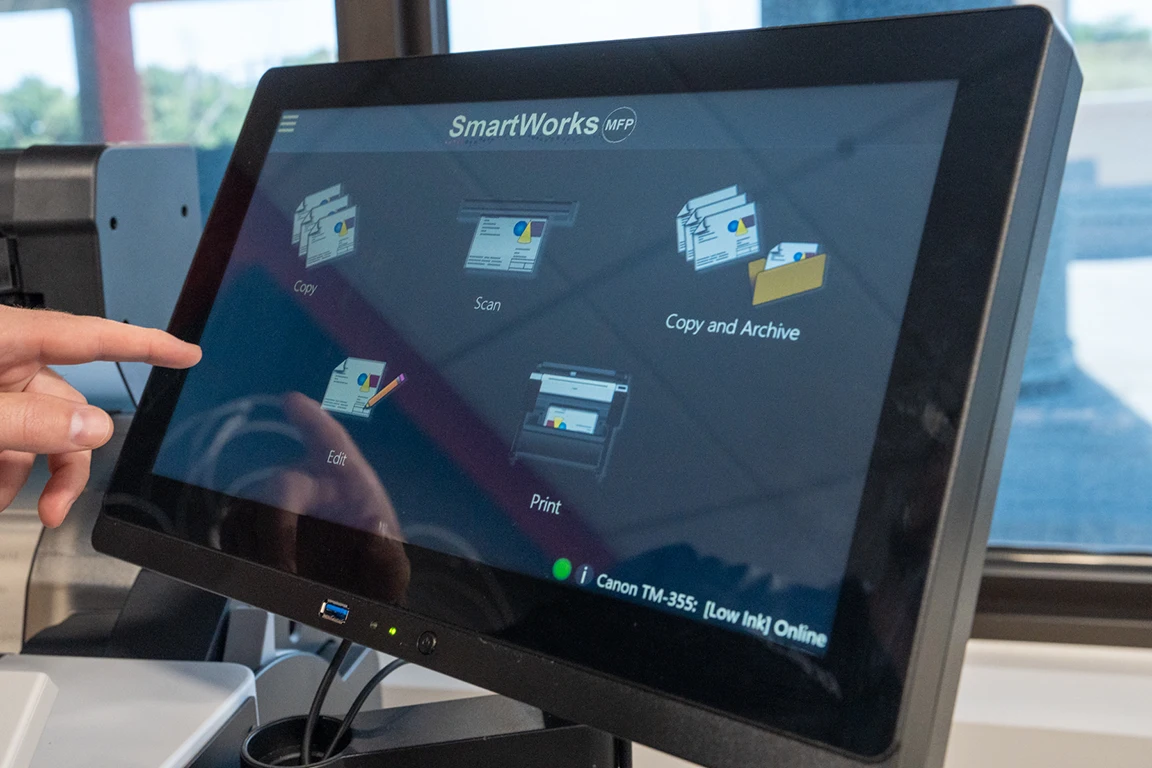
Print security is the practice of protecting printers, multifunction devices, and the documents they handle from unauthorized access, data theft, and network attacks. Modern printers are networked computers with hard drives and their own operating systems — which makes them a genuine attack surface that needs the same protection as

Backup and disaster recovery (BDR) is the combination of two protections: backup, which copies your business data so it can be restored, and disaster recovery, which is the tested plan for getting systems and operations running again after a disruption. Backup protects the data itself. Disaster recovery protects your ability
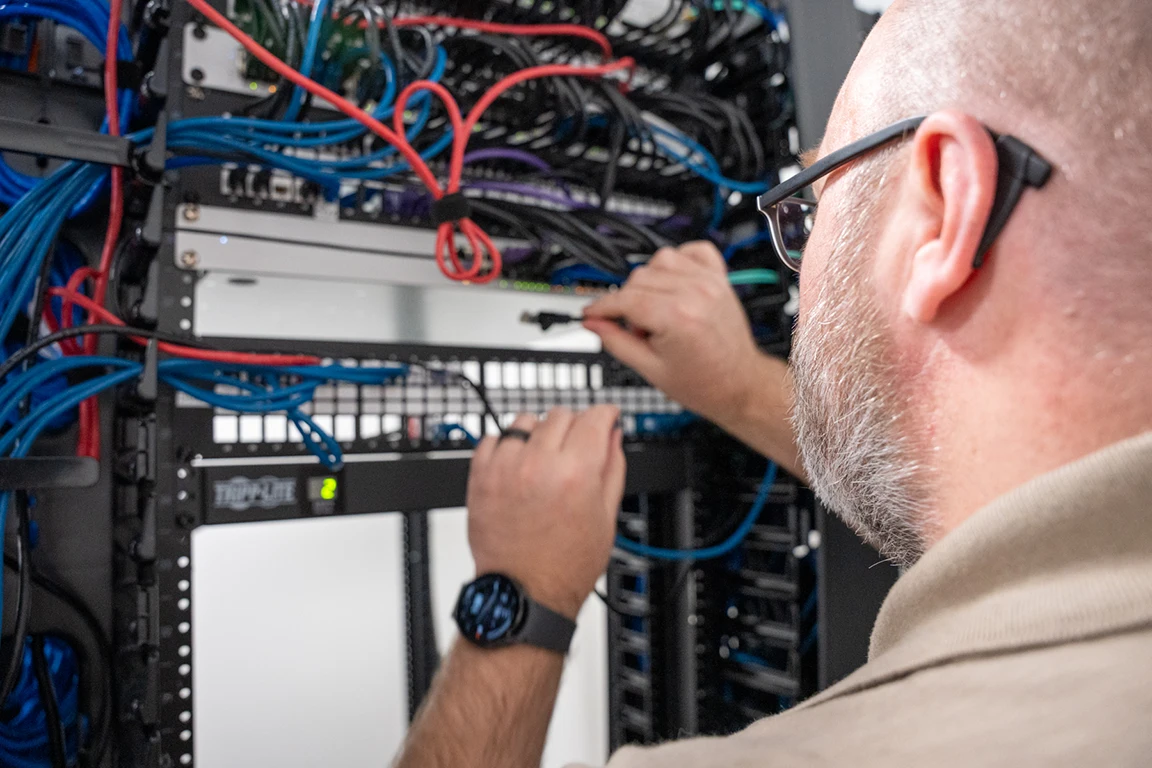
Most business networks run invisibly until the moment they don’t. Files open, email flows, applications respond, and nobody thinks about the routers, switches, and firewalls quietly moving all that traffic — right up until a switch fails, an internet circuit drops, or a misconfigured firewall blocks half the office from

The business phone system rarely gets attention until it fails — and then it gets all of it at once. A dropped call with a major client, a phone tree that routes customers into voicemail purgatory, a new office that can’t get lines installed for weeks: communication problems interrupt revenue

Cyber threats have moved from “if” to “when” for businesses of every size. Attackers scanning networks for weak spots don’t discriminate by industry, revenue, or headcount — they’re looking for vulnerabilities, and any business connected to the internet ends up on someone’s target list eventually. The businesses that recover cleanly
Physical mail hasn’t gone away. Invoices, statements, notices, contracts, appeals, marketing pieces, court filings, patient communications, and regulatory correspondence still move by mail in enormous volumes across every industry. The volume shows up on the operations side as labor, on the postage bill as expense, and on the budget as
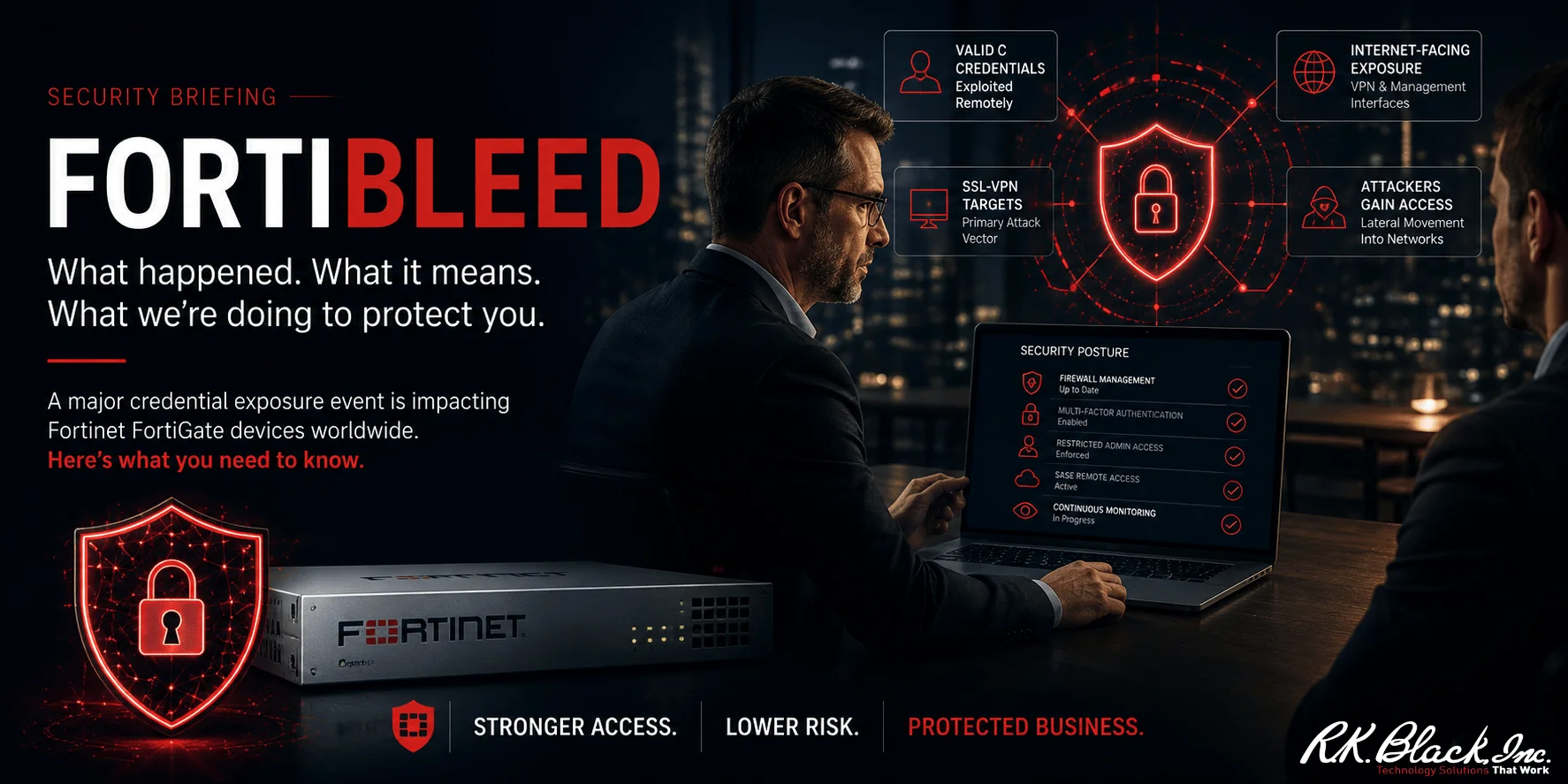
Every few months a new headline lands about a firewall breach, and the natural reaction is to ask, “Are we exposed?” The latest one—an exposure researchers are calling FortiBleed—is worth your attention, but not for the reason most coverage suggests. The real story isn’t a single vendor’s stumble. It’s that the legacy VPN
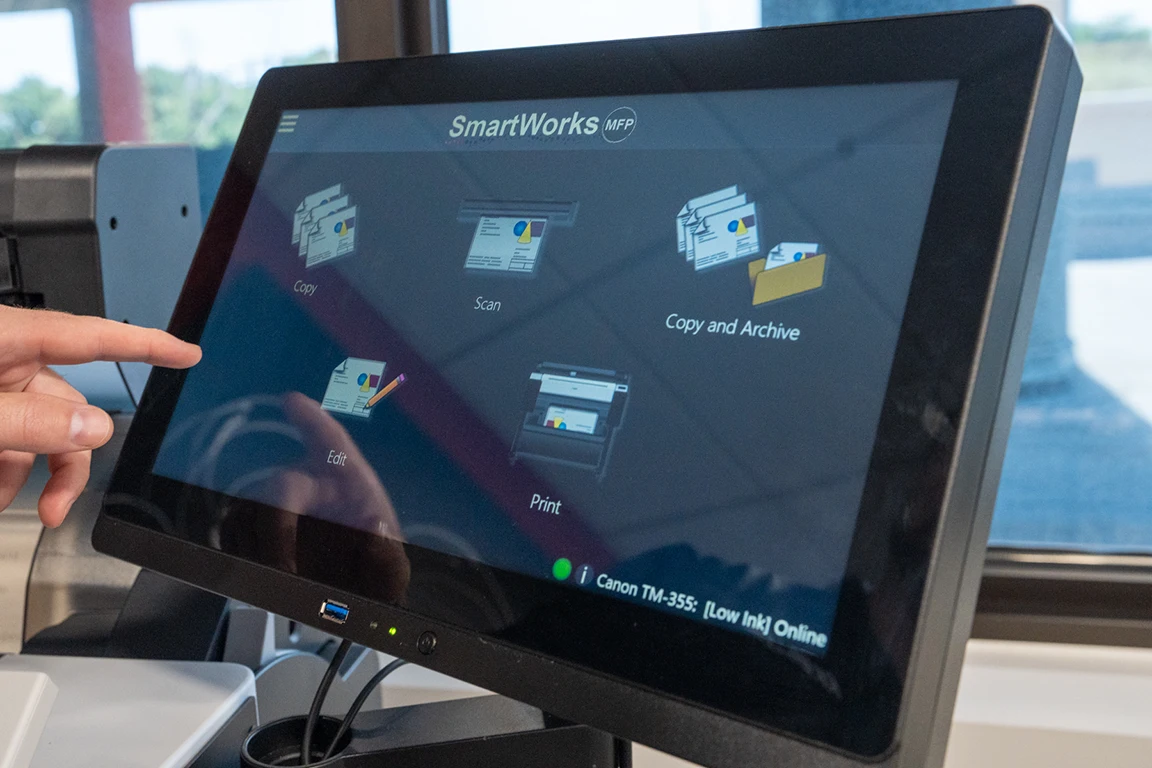
Documents are the connective tissue of every business. Invoices, contracts, HR records, patient charts, client files, board materials, regulatory filings — every department generates them, every process depends on them, and every audit examines them. When the systems managing all that volume break down, the friction touches everything: approvals stall,