
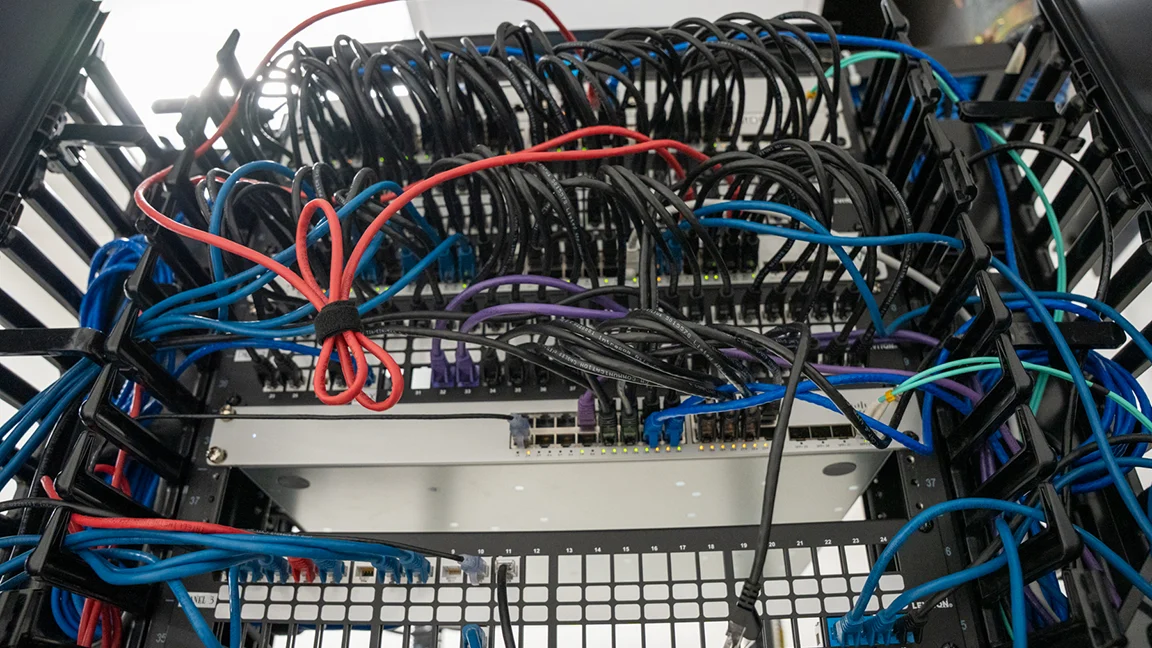
Network infrastructure operates as the circulatory system of modern business operations. Every transaction, communication, and data transfer depends on networks functioning reliably and securely. Yet many organizations approach network monitoring and management reactively, addressing issues only after they disrupt operations.
Understanding what are the key considerations for network monitoring and management transforms this reactive approach into strategic infrastructure planning.
Real-Time Visibility Requirements
Effective monitoring requires continuous observation of network traffic, device performance, and connection quality across your entire infrastructure. This visibility must extend beyond simple up-down status checks to encompass bandwidth utilization, latency measurements, packet loss rates, and error frequencies. Without comprehensive visibility, problems develop unnoticed until they reach crisis levels.
The monitoring scope must cover every critical component:
- Routers and switches managing traffic flow
- Firewalls controlling security boundaries
- Wireless access points serving mobile devices
- Servers hosting critical applications
- Cloud connections linking distributed resources
Gaps in visibility create blind spots where issues incubate undetected, eventually cascading into larger failures that impact business operations. Real-time monitoring enables proactive responses rather than reactive firefighting—when your monitoring system detects unusual traffic patterns, performance degradation, or device failures immediately, your team can investigate and resolve issues before users notice problems.
Scalability and Growth Planning
Your monitoring infrastructure needs capacity to accommodate additional devices, increased traffic volumes, and expanded geographical footprints without requiring complete replacement. The monitoring tools you select today should scale alongside your business rather than becoming obstacles to growth. Growth planning requires understanding current utilization and projecting future requirements—baseline measurements of bandwidth consumption, device capacity, and connection volumes provide the foundation for intelligent expansion decisions.
Network segmentation strategies impact both current performance and future scalability. Properly segmented networks isolate traffic types, improve security boundaries, and simplify troubleshooting. Flat network architectures create bottlenecks and security vulnerabilities that compound as networks grow.
Security Monitoring Integration
Security threats often manifest as network anomalies before triggering traditional security alerts. Unusual traffic patterns, unexpected connection attempts, and abnormal bandwidth consumption can indicate compromised devices, malware activity, or data exfiltration attempts.
Network monitoring that focuses solely on performance misses these critical security indicators until damage occurs.
Your monitoring approach must detect both performance issues and security threats through unified visibility into network behavior. This integration enables correlation between performance anomalies and security events, revealing attack patterns that might otherwise remain hidden. When your monitoring system identifies both the performance impact and security implications of network activity, response teams can prioritize accurately and respond comprehensively.
R.K. Black Inc. has observed that businesses treating network monitoring and security monitoring as separate functions consistently experience longer incident response times and higher breach costs than organizations with integrated approaches.
Alert Configuration and Management
Monitoring systems generate data continuously, but data without intelligent alerting creates information overload rather than actionable insights. Alert fatigue represents one of the most common network monitoring failures—when systems generate excessive alerts, particularly false positives, IT teams learn to ignore them, missing critical warnings hidden among routine noise.
Effective alert configuration requires balancing sensitivity against specificity.
Static thresholds can’t account for normal traffic variations, seasonal patterns, or gradual degradation that stays within preset limits. Advanced monitoring requires baseline establishment, anomaly detection, and intelligent alerting that recognizes when current behavior deviates from historical norms rather than just exceeding arbitrary thresholds. Alert prioritization determines whether your team addresses the most critical issues first or wastes time on low-impact problems.
Your monitoring system should categorize alerts by business impact, distinguishing between issues requiring immediate response and those that can wait for scheduled maintenance windows.
Performance Baseline Establishment
Understanding whether network performance is good, bad, or deteriorating requires knowing what normal looks like for your specific environment. Performance baselines document typical network behavior under various conditions—peak usage periods, off-hours, seasonal variations, and special event traffic.
Without established baselines, you’re constantly reacting to symptoms without understanding whether current performance represents normal operations or developing problems.
Baseline establishment requires sustained measurement across sufficient time periods to capture normal variations. A single week’s data misses monthly patterns; a single month misses seasonal variations. Comprehensive baselines develop over months, incorporating multiple business cycles to distinguish genuine trends from temporary fluctuations.
These performance baselines inform capacity planning, troubleshooting, and change management decisions—when you understand how specific network segments typically perform, you can accurately assess whether new applications will require infrastructure upgrades, identify which changes improved or degraded performance, and predict when current capacity will become insufficient.
Redundancy and Failover Capabilities
Critical network paths require redundant connections that automatically activate when primary routes fail. This redundancy extends beyond internet connections to include internal network links, power supplies, and key infrastructure devices. The monitoring system must continuously verify that redundant paths remain functional—dormant backup systems that fail when needed provide false security without actual protection.
Failover automation determines whether redundancy provides genuine protection or just theoretical backup. Manual failover processes introduce delays measured in minutes or hours, during which business operations suffer disruption.
Automated failover triggers within seconds, maintaining operations transparently while your team addresses the underlying failure. Testing redundancy and failover mechanisms regularly confirms that backup systems actually work when needed. Networks with untested failover configurations often discover that backup paths have failed silently or were misconfigured, rendering redundancy investments worthless during actual failures.
Vendor and Device Compatibility
Network environments typically combine equipment from multiple vendors, each with proprietary management interfaces and monitoring protocols that complicate unified visibility. Your monitoring approach must accommodate this multi-vendor reality, providing consistent visibility regardless of device manufacturer.
Monitoring solutions that only work with specific vendors create fragmented infrastructure visibility.
Comprehensive monitoring requires tools that speak multiple protocols and integrate with diverse equipment through standard interfaces. Legacy device support creates particular challenges as older equipment often lacks modern monitoring capabilities.
Your monitoring strategy must account for these limitations, potentially requiring agent-based monitoring for devices that don’t support standard protocols or don’t expose sufficient operational data through native interfaces.
Data Retention and Historical Analysis
Current network performance tells only part of the story. Understanding trends, identifying recurring issues, and conducting root cause analysis requires historical data retention and analytical capabilities that extend beyond real-time monitoring.
Historical data enables trend analysis that reveals:
- Gradual performance degradation developing over months
- Cyclical patterns tied to business operations or seasonal factors
- Correlations between seemingly unrelated events
- Capacity consumption rates informing infrastructure planning
- Evidence supporting budget requests for network improvements
When you can compare current performance against six months of historical data, patterns emerge that daily monitoring obscures. Storage requirements for network monitoring data can become substantial, particularly in large environments with detailed monitoring.
Your retention strategy must balance the analytical value of historical data against storage costs and query performance considerations. Most organizations implement tiered retention—granular data for recent periods, aggregated summaries for historical analysis.
Documentation and Knowledge Management
Network documentation must extend beyond physical topology diagrams to include configuration standards, troubleshooting procedures, vendor contacts, maintenance schedules, and the reasoning behind architectural decisions. This documentation transforms institutional knowledge from information stored in individuals’ heads to organizational assets that persist regardless of staff turnover.
Managed services providers maintain systematic documentation as core business practice because their operational efficiency depends on consistent, accessible information about client networks.
Organizations managing networks internally often neglect documentation until knowledge loss creates crisis situations when experienced staff depart. Your monitoring system should contribute to documentation automatically by recording configuration changes, capturing performance baselines, and maintaining event histories that explain why specific modifications occurred. This automated documentation supplements manual efforts and creates audit trails that support compliance requirements while aiding troubleshooting.
Compliance and Regulatory Requirements
Industry regulations increasingly mandate specific network monitoring and management practices, making compliance a critical consideration for monitoring system selection and configuration. Healthcare organizations must comply with HIPAA requirements for protecting patient data, including network security monitoring and access logging. Financial services firms face PCI DSS mandates for cardholder data protection that include specific network segmentation and monitoring requirements.
Government contractors must meet NIST cybersecurity framework guidelines that prescribe network monitoring capabilities.
Your monitoring approach must generate and retain the audit logs, access records, and security event documentation that regulators require. Attempting to retrofit compliance capabilities into monitoring systems after regulatory audits begin creates enormous challenges and potential penalties. Building compliance requirements into initial monitoring design prevents these problems and demonstrates good faith compliance efforts.
Automation and Orchestration
Automation opportunities exist throughout network management—routine configuration changes, security policy updates, capacity adjustments, and incident response procedures can execute automatically based on monitoring data and predefined rules. This automation accelerates response times from minutes or hours to seconds while reducing the errors that manual processes inevitably introduce.
Orchestration coordinates automated actions across multiple systems, creating workflows that span monitoring detection, security response, performance optimization, and documentation updates.
When your monitoring system detects a security threat, an orchestrated response might automatically isolate affected network segments, update firewall rules, capture forensic data, and alert security teams—all within seconds of threat detection. The automation and orchestration capabilities you build today create the foundation for tomorrow’s network management efficiency. Starting with simple automated responses to common issues and gradually expanding automation scope builds confidence while delivering immediate operational benefits.
Cost Management and Optimization
Monitoring data reveals cost optimization opportunities that remain invisible without systematic analysis. Underutilized network circuits, over-provisioned bandwidth, redundant paths that exceed business requirements, and inefficient routing all waste money that monitoring can identify and quantify.
Cloud networking costs particularly require careful monitoring as usage-based pricing models can produce unexpected expenses when traffic patterns change. Without visibility into cloud network utilization and costs, organizations frequently discover that network data transfer charges significantly exceed initial estimates. Proactive monitoring enables cost controls that prevent budget overruns while maintaining required performance levels.
Networking infrastructure investments should align with actual business requirements rather than arbitrary benchmarks or vendor recommendations. Your monitoring data should inform these investment decisions by revealing genuine capacity needs, performance bottlenecks, and security vulnerabilities that justify infrastructure spending.
Strategic Alignment with Business Objectives
The monitoring metrics you track should connect directly to business outcomes—customer experience quality, transaction completion rates, employee productivity, and operational efficiency. When network monitoring focuses solely on technical metrics without translating them into business impact, leadership teams struggle to understand infrastructure investments and prioritize improvement initiatives appropriately.
This business alignment requires understanding which applications and services matter most to your organization’s success, then ensuring monitoring provides visibility into those critical paths with appropriate alerting for issues that impact business operations.
Treating all network traffic equally wastes monitoring resources on low-value activities while potentially missing problems affecting critical business functions. Your network exists to enable business operations, not as an end unto itself. The key considerations for network monitoring and management must therefore reflect this reality—prioritizing business continuity, enabling growth, protecting assets, and delivering the reliable infrastructure that modern business demands.